Zadie Smith: Inequality Makes Culture Clashes Feel Existential
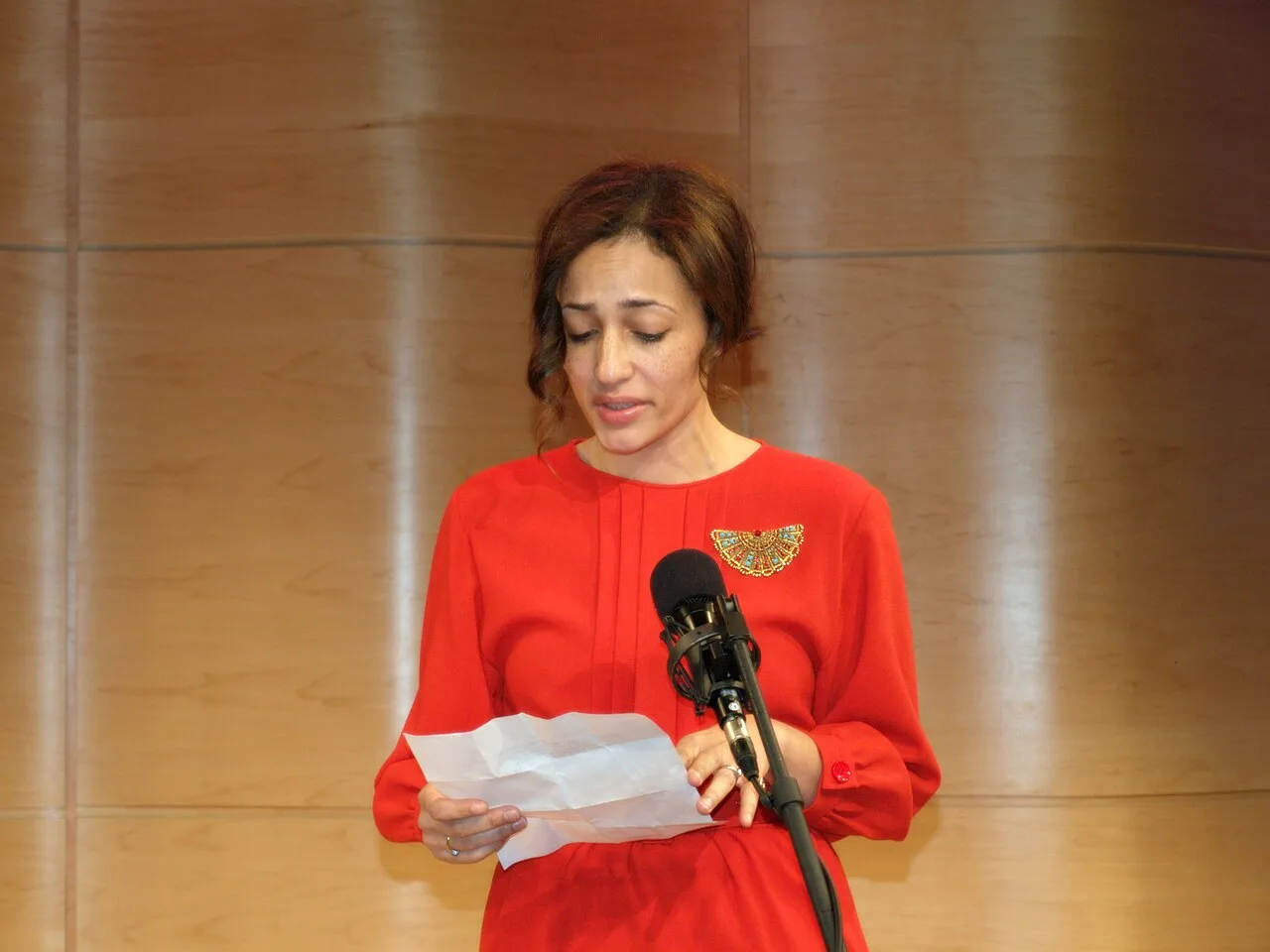
Novelist Zadie Smith has said that inequality has made culture clashes feel "existential". Speaking to Dua Lipa at the Southbank Centre's London literature festival, she said it has become "natural to look to your left and think 'who the fuck are you?'". She linked this to the decline of Britain's "incredible, historic" welfare system.
The conversation centred on White Teeth, Smith's debut novel, published in 2000 and set mostly in the last three decades of the 20th century. Lipa asked how attitudes to multiculturalism have shifted since the 1980s and 1990s, and about the current "dividing line" on immigration in UK politics. Smith pointed to rising inequality and unemployment.
She described how things looked when people lived in decent housing and knew they could be treated in hospital like "the rich kid down the road". Then, she said, differences were interesting and sometimes annoying but not existential. "Now, they're existential," she said. "When you can't get a job, when there's no housing, when your schools are falling apart, when the hospitals are falling apart."
White Teeth follows three families, the Joneses, the Iqbals and the Chalfens, in Kilburn and Willesden, north-west London, where Smith grew up. She praised her state education, which she said has stood her in good stead. Of her old neighbourhood she said that "everything is harder, everybody is poorer, everybody is struggling more".
A nostalgia for the left
Smith encouraged what she called "a nostalgia for the left". She said nobody wants the LGBTQ+ politics of the 80s or the racial prejudice shown in her novel, but asked whether people want the healthcare, schools and education of that time. Her answer was that they do. What mattered to her, she said, was a social democracy that basically functioned and "might function again if people cared about it".
She began the book at 21 and it came out when she was 24. She finished it after a break-up, back in her mother's home. The last pages came on 14 February, and she then went straight out to a club. That, she said, is why the ending is "a chaos" and why young people should not write novels.
The two also talked about criticism. Lipa said learning to live with reviews, good and bad, was one of the hardest things for her. Smith called literary criticism "absolutely essential" because it helps develop taste, and said she quite loves a well-written takedown.
Since White Teeth, Smith has written five more novels: The Autograph Man, On Beauty, NW, Swing Time and The Fraud. Her latest book is the essay collection Dead and Alive. The festival runs until 1 November, with speakers chosen by Lipa, including Patti Smith, Malorie Blackman and Hisham Matar.
Source: The Guardian