Tenpole Tudor Recall How Swords of a Thousand Men Was Made
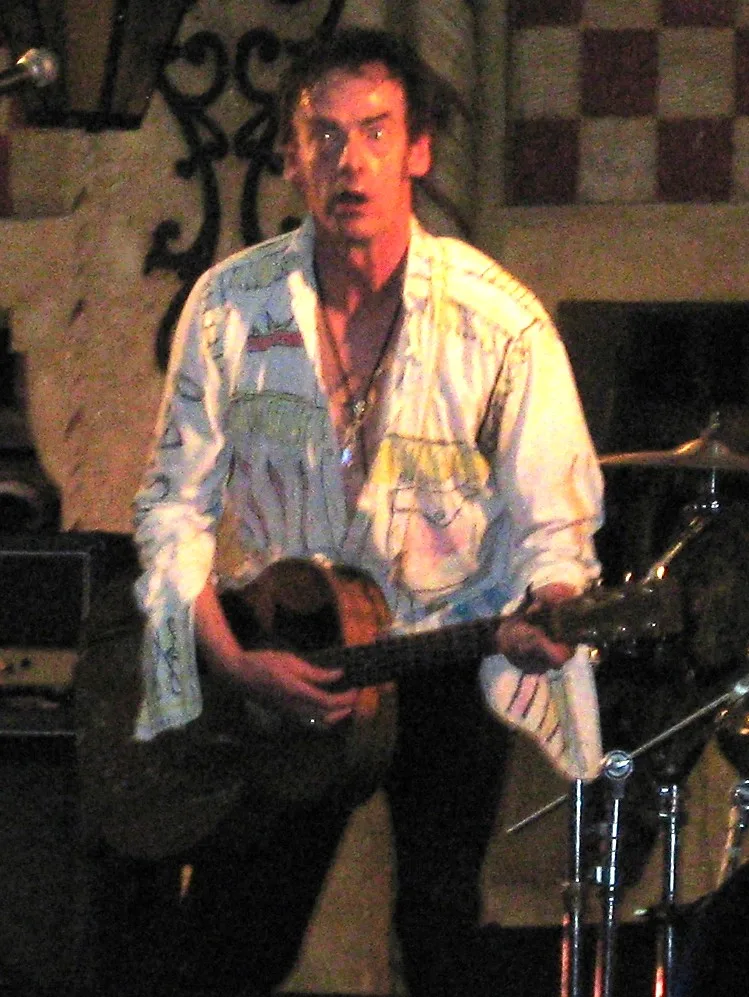
Swords of a Thousand Men, the Tenpole Tudor song people were buying in 1981, now has its story told by two band members: singer Edward Tudor Pole and bassist Dick Crippen.
An idea from the tour coach
Tudor Pole says he worked out the basic idea during a three-month tour of the northern hemisphere with Stiff Records. Writing on the road is almost impossible, he says, because there is no solitude, so he retired to the toilet on the tour coach. He describes the melody as a boogie-blues progression, partly inspired by Norman Greenbaum's Spirit in the Sky and Canned Heat's On the Road Again.
Lyrics did not come until the band was off the road. Rehearsals took place close to its favourite drinking spot, the Castle on Holloway Road in London, and the pub gave Tudor Pole his opening line, which has a castle and a return from the war.
A studio without a single
Crippen remembers a different problem. Work on the band's first album, Eddie, Old Bob, Dick and Gary, began in a rush. When the mixes came back, nobody could hear a potential single.
Then Tudor Pole brought the skeleton of Swords. Its rhythm had a faint rockabilly feel, and that caught the band's attention. They worked it up outside the studio. Tudor Pole wanted chants that could be sung on football terraces, which is where the "Hoo-rah" refrain comes from. Crippen says the band also took pride in its harmonies.
Bass, horses and a borrowed trumpet
The song was recorded at Island Studios with Alan Winstanley, who was also producing Madness at the time. Crippen calls him a master engineer. Even with every part down, the song had no intro.
Crippen, influenced by the Stranglers' JJ Burnel, wanted a bass line that people would know at once, using as few notes as possible. The "dinga-dinga" start was the result. On its own it was too sparse, so the galloping horses were lifted from an LP of sound effects held in the BBC library.
The horn is Crippen himself. A former bugler in a Boy Scouts' band, he used a trumpet from a friend and kept the part to two notes. Drummer Gary Long overdubbed timpani, playing from the corridor for a big, ringing sound.
Knights on stage and on screen
Tudor Pole says the band dressed as knights in armour, in doublets, hose and tabards, and that the live act was heavily staged. Entrances were sometimes set to the William Tell Overture, followed by him reciting the St Crispin's Day speech from Shakespeare's Henry V.
The crowd would shout that he was the rightful king of England. He would say he was not, and they would insist he was. Tudor Pole puts the act in the tradition of Sweet, Slade and Status Quo, with a touch of music hall. He adds that Swords was among the earliest pop videos shown on MTV. For the shoot, the band hired members of the Sealed Knot historical reenactment society.
Tudor Pole believes the boys who bought the record in 1981 were 11 years old, and that it became a playground craze. Knights, he says, were the first superheroes. Crippen describes the song as a punk-psychobilly crossover that brought the band a rockabilly and psychobilly following. At a gig at the Crystal Palace Bowl, he recalls, the band was bombarded with mud and weeds.
Tudor Pole also remembers a policeman who stopped him in the street and asked if he was responsible for the song. He expected trouble. The officer shook his hand instead.
Where the band members are now
Tudor Pole has been touring to promote his autobiography. Its title, The Pen Is Mightier, plays on the song. When he performs it, the audience sings the chorus for him. He notes that the boys who first bought the record are now in their late 50s.
Crippen says the band broke up too soon. He later set up Panther Studios in Surrey and now makes ambient music as well as recording punk bands. About ten years ago, with a group called the Weird Things, he backed Tudor Pole on Swords at a London show.
Source: the Guardian