SNCF's New-Generation TGV Carries First Passengers
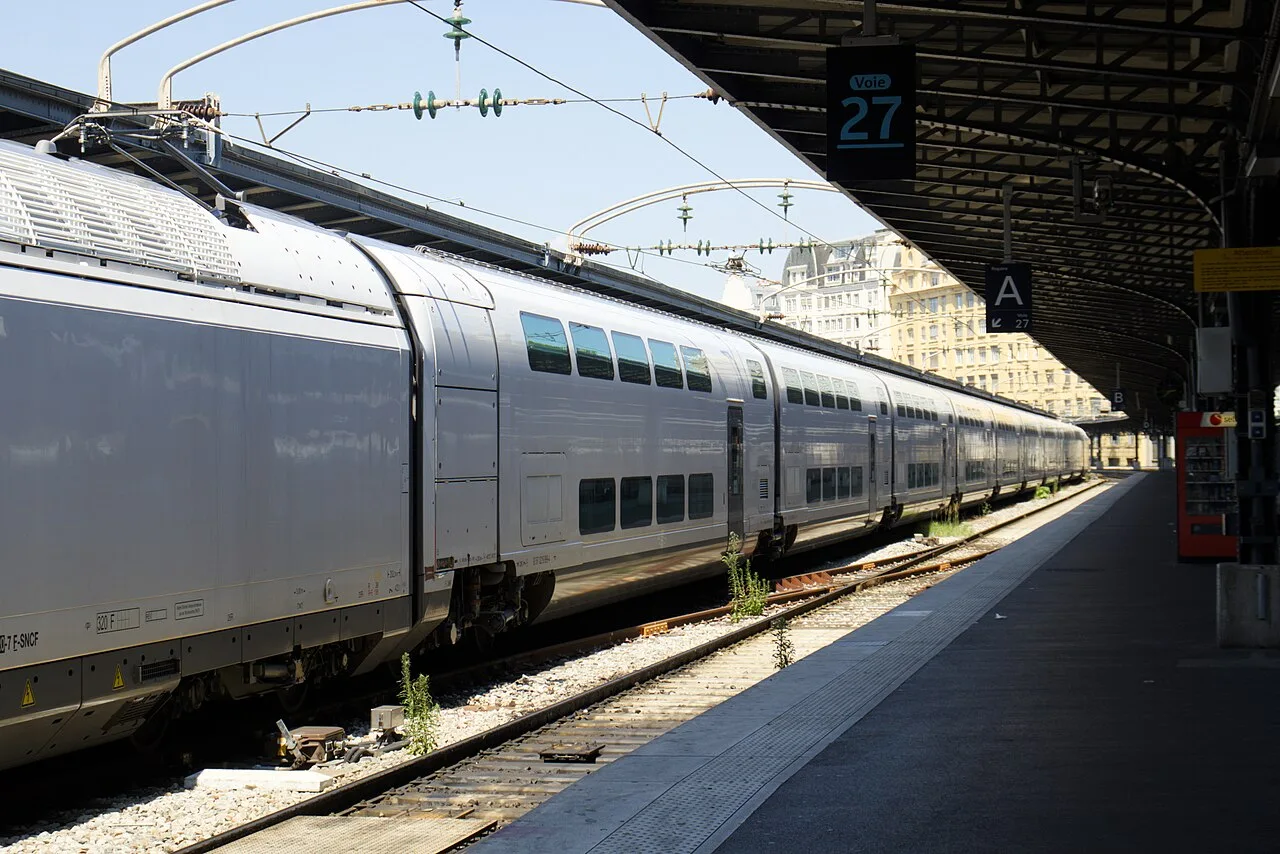
France's fifth generation of TGV began carrying passengers on 6 November. Built by Alstom as the Avelia Horizon and now branded TGV Nouvelle Génération by SNCF Voyageurs, the trains are designed to carry more people in the same length of train while using less energy.
Six trains on the Marseille line
The first service ran from Paris to Marseille. The launch was attended by Transport Minister Philippe Tabarot, SNCF Group chief executive Jean Castex and Alstom chief executive Martin Sion.
Six trainsets have started revenue runs from Paris Lyon to Marseille St-Charles. A Paris–Nice return trip is due at the end of November, and the Alps come in 2027.
The trains reach 320 km/h. Each is 202 m long and has 573 seats in first and standard class. A denser layout proposed for Ouigo services could carry 740 passengers.
What is new on board and under the floor
Lower weight, better aerodynamics and more efficient traction add up to a 20% overall cut in energy use. At full capacity the cut is 32% per passenger-kilometre. The power cars are shorter than those of the Euroduplex, which frees room for an extra passenger coach. The trainsets have nine double-deck aluminium coaches and two power cars.
Drivers get a cab redesigned from scratch. It has a European-style desk and a single controller for both traction and braking.
If the power supply fails in an emergency, storage units at the back of the power cars keep safety and comfort systems going. They can also supply enough traction to reach a station, so the train does not end up stuck far from help.
Each seat gets USB and mains sockets, a reading light and wi-fi, and screens by the doors and in every saloon show passenger information. There are cycle spaces, and coach 3 has a mobile platform that lets wheelchair users reach the lower deck without help.
The train carries nearly 400 innovations for which patent applications have been filed. Predictive maintenance, fewer components and better access are meant to cut maintenance costs by more than 30% against the previous generation.
A project ten years in the making
The programme began in 2016 as the TGV of the future, an innovation partnership between Alstom and SNCF Voyageurs. SNCF developed it as TGV M, a name that later became TGV Inoui before settling on today's branding. About 2,000 staff from the two companies work on it, and 11 Alstom sites in France are involved, including Belfort and La Rochelle.
Alstom says the Avelia Horizon is its biggest advance in the design of its fastest trains since the TGV Duplex went into service in 1996.
The launch came later than first planned. Entry into service was originally envisaged for 2023-24, before the 2024 Olympic Games. SNCF Voyageurs is spending €300m to adapt maintenance facilities for the fleet.
The order book
SNCF Voyageurs ordered 100 trainsets for French domestic services in 2018 for €2.7bn. A further 15 sets, worth €590m, were ordered in 2022 for Paris–Milan and planned Italian domestic routes. Those are expected in service in 2028.
Eurostar ordered 30 trainsets in October 2025 for €1.4bn, branded Celestia and due in May 2031. SNCF Voyageurs ordered a further 15 quad-voltage sets in January 2026 for France–Brussels services, with entry into service expected in 2029. In all, 160 trainsets are being financed from SNCF Voyageurs' own funds, an investment of €4bn.
Morocco's national railway ONCF has ordered similar trainsets. So has the French open-access start-up Velvet, which has 12 on order.
Source: Railway Gazette International