Researchers Report Red Blood Cells in 115m-Year-Old Dinosaur Bone
Soft tissue in a dinosaur fossil is a controversial claim. A team now says a 115m-year-old bone holds what look like red blood cells, plus a chemical sign of blood, though one other palaeontologist doubts the structures are cells.
Heme in the bone
Chemical tests found heme, the organic compound that lets haemoglobin carry oxygen around the body, and products of its breakdown. They also found traces of the amino acids that make up collagen, a protein present in connective and other tissues.
Prof Kliti Grice of Curtin University in Western Australia, who led the team, said such cells with distinct heme-related chemistry had never been found in situ in any fossil. She called it a world first.
The doubter's case
Prof Mary Schweitzer of North Carolina State University, who has reported soft tissue and blood-vessel remnants in dinosaur fossils, is not convinced these are red blood cells.
Her reasoning is about shape. Dinosaur red blood cells should have a "nuclear bulge" making them look dome-like on both sides. The structures in this bone are concave, so they might be something else.
Schweitzer was more persuaded by the heme and the collagen amino acids. She said the old rule that original organic material vanishes within a million years is being challenged.
Where the structures were found
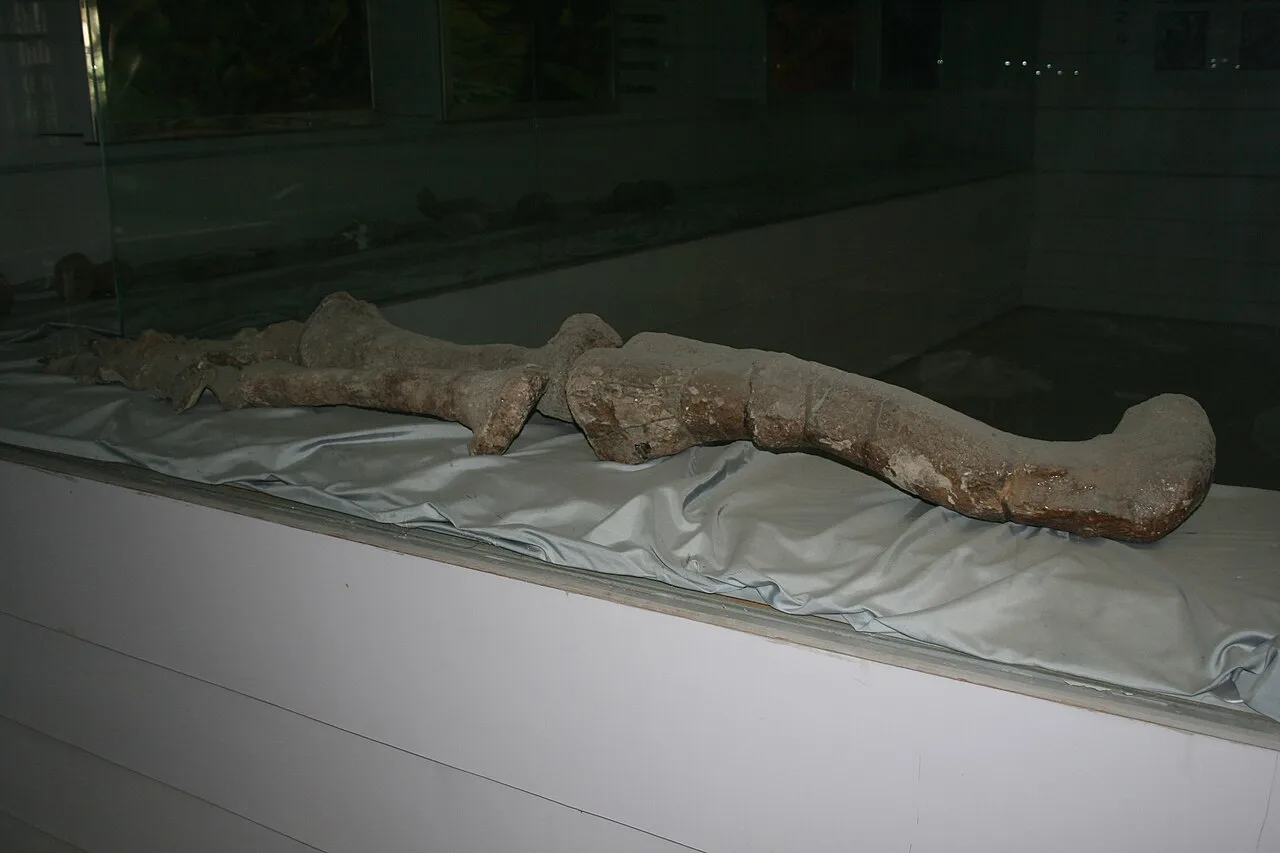
The animal was an Aratasaurus, a small meat-eating dinosaur from what is now north-eastern Brazil. A mine yielded the remains in 2008, and the National Museum of Brazil keeps them for further study.
While analysing the hind leg bones, Grice spotted small, round structures inside thin canals that once carried blood vessels. Electron microscope images show they resemble red blood cells. The study appears in Proceedings of the National Academy of Sciences.
How cells might last
If the structures are red blood cells, the next question is how they lasted. Grice says a manganese compound called hausmannite formed in and around the cells and may have stabilised them before fossilisation. The same process might have preserved the amino acids.
Limits of the claim
Grice urges caution about what the work implies. It does not mean proteins or DNA survive in ancient fossils. She said the aim is to establish how much real molecular information can survive over deep time.
She added that museum collections worldwide may already hold such information, waiting for new questions.
Our view
Whether the structures are really cells, and not another feature of the bone, is the point on which the finding stands or falls. Independent checks of the shape question, and tests on other fossils, would show whether this is a one-off or a method that other museums can use.
Source: the Guardian