Child's Necklace Found in Sealed Pompeii Wardrobe
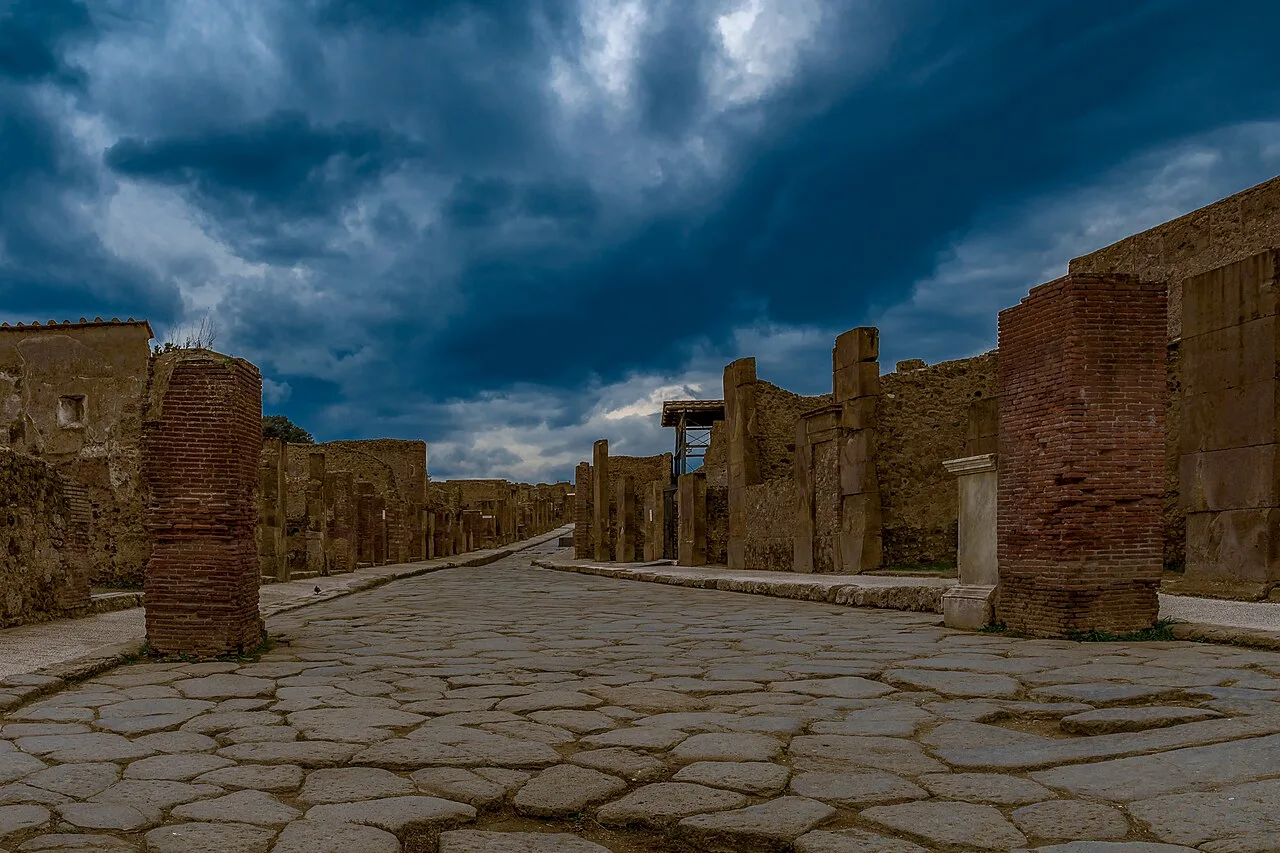
A wooden wardrobe sealed for almost 2,000 years has been opened in the ruins of Pompeii. Inside were tweezers, a small glass perfume bottle, an incense burner and a bronze lantern, left since the eruption of Mount Vesuvius in AD79.
It stood in a room of a home on Via dell'Abbondanza, one of the busiest streets in the ancient city.
A necklace of charms
The most striking object is a necklace with more than 20 small charms. They are made of different materials and show several deities, including Bes and Mercury.
The type is called a crepundia and was traditionally worn by children. The charms rattled, which helped parents keep track of a child, and could also help identify it.
"A crepundia had a very special function," said Gabriel Zuchtriegel, director of the Pompeii archaeological park. "It was a reminder of their parents who perhaps lived far away." He said it was typical of a society whose people were often displaced, because many moved around the Mediterranean and carried personal objects with them.
Coins, pots and mice
The wardrobe also held 38 bronze coins, cooking pots and a wooden box with lead weights. The weights suggest that someone in the household was a tradesperson.
Money and personal belongings left behind could point to owners who had to flee the eruption at short notice, Zuchtriegel said.
In a storage area, archaeologists found the fragmented skeletons of two mice inside an amphora.
Inscriptions once linked the house to a man called Cornelius Maximus, but they are no longer visible. The facade was first excavated in 1912. Experts are only now working in some of its rooms, as part of a wider restoration project.
Digging is also under way at the Villa of the Mysteries, in a suburb of Pompeii, which came to light in the early 20th century. "It's never been completely excavated, so we kind of want to finish the job," Zuchtriegel said.
The team is not working in the part where the owners lived and where great frescoes might be expected. It is excavating the servants' quarters. Zuchtriegel said the aim is more insight into the daily life and economy of people "in the shadow of history", since most inhabitants of the villa were servants.
Source: The Guardian