Oxford Street Closes to Traffic as Shoppers Weigh the Change
Almost a kilometre of London's Oxford Street was closed to vehicles on Monday, and the mayor, Sadiq Khan, called it a "momentous day". Buses, bikes, taxis, e-scooters and pedicabs are banned from the stretch along with private cars. About half of the 1.2-mile (1.9km) street is now vehicle-free, roughly from Oxford Circus station to Marble Arch.
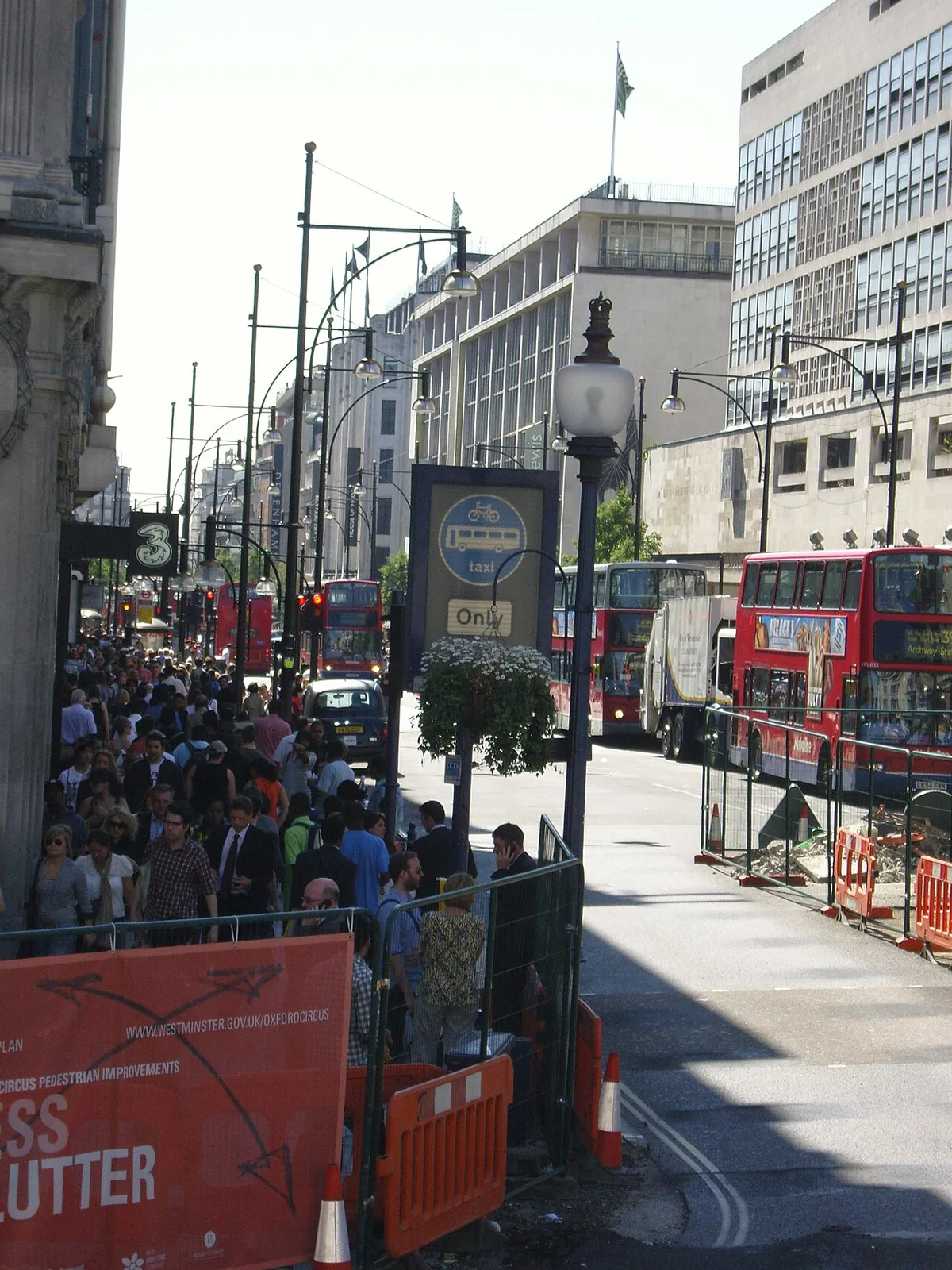
The morning was wetter than the mayor would have wished. East of Oxford Circus, a steady stream of red buses swung round the last junction before the pedestrianised section while crowds packed the pavements. To the west, people walked through temporary bollards onto a green banner laid along the tarmac that declared the street traffic-free.
Shoppers welcome the space
Shoppers who spoke to the Guardian said the extra room meant they were no longer jostled off the pavement. Daniel Te, who moved to London from the US in July, took out a sketchpad to record the scene. He said he would normally avoid the street because it was "too busy", and that the change made him "more inclined to come". A former city planner, he thought the rerouting of buses might make some journeys less convenient, but called that "a small price to pay".
Raquel Cox, on holiday from Ireland, travelled to the street after seeing a news item about the change. She accepted that surrounding streets would become busier, but said that as a shopper "it's a better experience". Abbas Shigival, who runs a kiosk selling tourist souvenirs at the start of the pedestrianised section, said it would take time to judge the effect on his business, although the morning seemed a little busier than usual.
Khan, whose first jobs were in retail on the street, spoke at John Lewis on Monday morning. He said the street had been in decline for a couple of decades, and he described the project as a "proof of concept" that investing in people rather than traffic leads to better footfall and spend. London would be monitoring the changes closely, he said.
Buses diverted, objections from drivers
Many of London's double-decker buses will now be sent onto neighbouring roads. Claire Mann, chief operating officer at Transport for London, said there would still be "plenty of capacity for passengers" and that reliability should not be affected. TfL will monitor whether ridership changes.
Ben McMullan, a taxi driver, said traffic was "definitely worse on the surrounding streets, and accessibility is a huge problem". He had already dropped off several customers who struggled without direct access to the street by car, including a mother with a pram and a woman with walking difficulties. He feared the change would hurt his business.
A cyclist who gave his name only as Jack was one of many riders stopped by security guards during the day as he rode home from a construction job. He said he would ride down the road regardless, and that an alternative route would lengthen his commute.
The closure took effect in time for the Christmas shopping period. The wider £150m transformation, with trees, seating and level plazas for events, will start taking shape from spring 2027. Permanent plans depend on feedback from this first phase and on testing.
Source: The Guardian