Only Two of 91 Climate Adaptation Plans Mention Atlantic Current
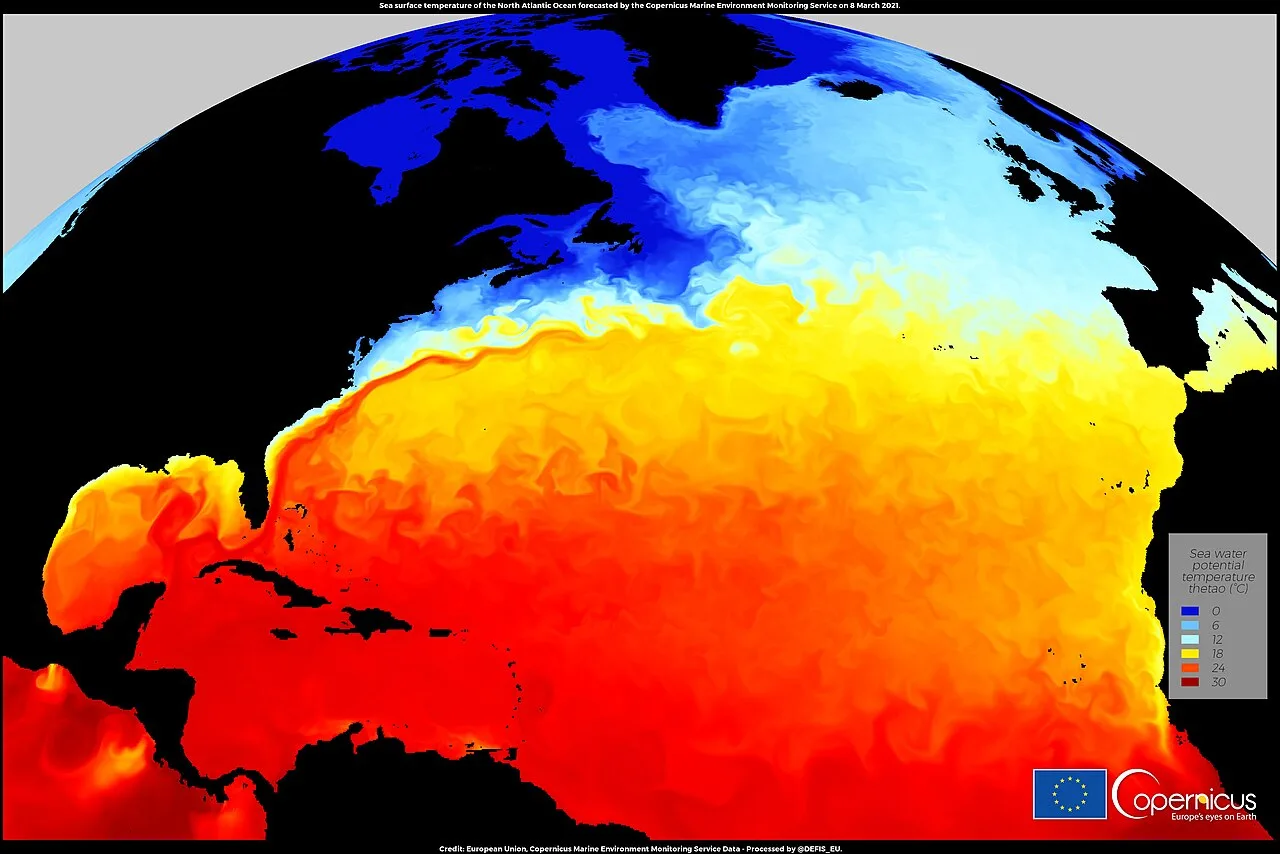
Of 91 national adaptation plans submitted to the UN climate convention, only two mention the Atlantic meridional overturning circulation (AMOC), and neither sets out concrete action if it collapses. That is the finding of a new article in Nature Sustainability.
The authors write that Icelandic government officials recently met to discuss what would happen if the current weakened significantly or collapsed altogether.
What the current does
The AMOC moves warm surface water northward in the Atlantic and sends colder deep water back south. It regulates the climate by redistributing heat. As the climate warms it is weakening and could keep doing so through this century. A full collapse is unlikely before 2100, the authors say, but a recent study projected a 50% weakening by the end of the century under an intermediate emissions scenario. A near-complete shutdown happened about 17,500 years ago, after the coldest period of the last ice age.
A slowdown or collapse would affect temperature and rainfall worldwide. In northern Europe, losing the heat carried north from the tropics could bring winter cold extremes of -20°C in London. Models in which the AMOC is shut down show West African monsoons weakening by 29% on average and the Indian summer monsoon by 19%. Other studies suggest greater drought risk in parts of Central America, West Africa and the Amazon region.
Brazil's plan has a dedicated box warning that a shutdown could push the Atlantic rain belt southward and tip the Amazon toward collapse. Ireland's plan says relying solely on adaptation may prove insufficient.
Five steps proposed
- Identify the investments and countries most at risk.
- Stress-test key investments with simulations that include AMOC-collapse scenarios.
- Favour flexible solutions that can be adapted or expanded, such as projects built in stages.
- Use ocean monitoring to inform adaptation decisions.
- Reassess global climate projections, since the AMOC affects how much carbon the oceans absorb.
The authors say these actions do not require predicting whether or when the current will collapse. They add that the steps should not divert resources from heat waves, droughts and floods already under way, and that rapid emission cuts remain crucial.
Source: The Conversation