IBM Team Joins Two 120-Qubit Chips With Four Meter-Scale Links
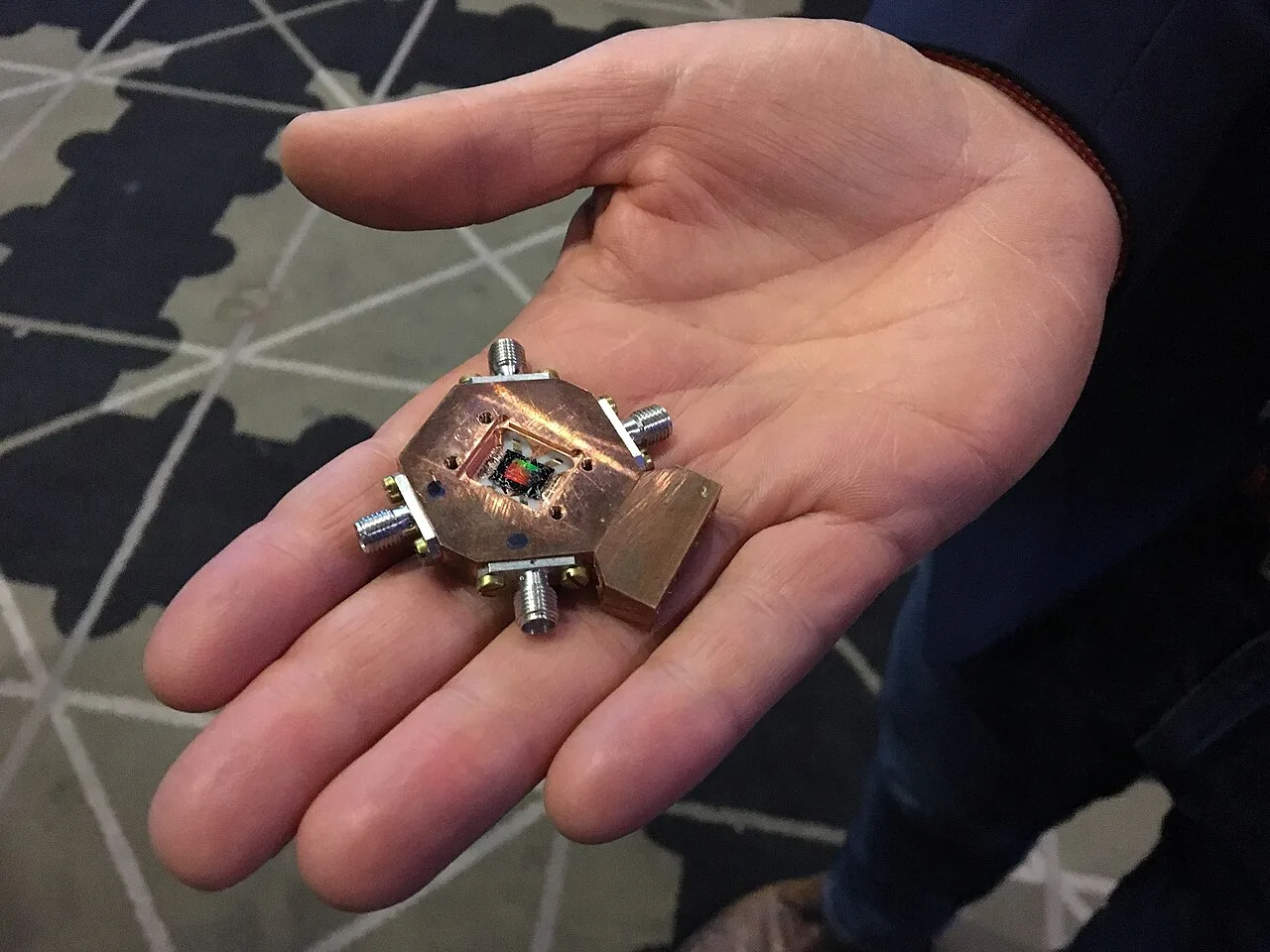
Researchers at IBM Research have joined two large superconducting quantum processors using four separate high-quality links. They say it is a first, and it points toward quantum computers built from several connected parts.
Why modular designs matter
Many researchers believe the way forward is to build quantum computers in multiple interconnected parts. Separate processors are linked so they can work together as one larger machine. The connections must carry fragile quantum information without destroying it.
For superconducting processors, that means reliable links around a meter (3.3 feet) long, inside equipment chilled to just above absolute zero.
What was missing before
Until now, quantum links between superconducting chips mostly involved a single connection between small experimental processors. Those links let researchers move quantum states from one chip to another and create entanglement.
Larger machines will need many connections between processors already mounted in their refrigerators. The attachments must sit close together, lose very little signal and keep working as the system is repeatedly warmed and cooled.
How the IBM setup works
The team linked two of its 120-qubit Nighthawk R1 processors. In each link, a qubit in one processor passes its information to a dedicated interface qubit. An adjustable coupler then feeds it into an 80 cm (31-inch) superconducting aluminum cable. The cable carries it to matching components on the other chip.
All four links were installed after both chips were already in place. To pack the cables more densely, each one plugs into its chip from directly above rather than from the side.
Test results
Across the four links, quantum states moved between the chips with an average accuracy of 99%. The best link reached 99.29%. Two-qubit logic operations spanning both processors averaged 94.75%.
The team created entangled states shared across both processors, including 4- and 6-qubit states. It also generated two entangled pairs at the same time through neighboring links. All four connections stayed operational through three cycles of warming and cooling.
The work is described in a paper on the arXiv preprint server.
What is still needed
Further improvements are needed before the system is commercially practical, especially in how long the quantum information lasts.
Our view
Accuracy near 95% for operations across the two chips is lower than the link figures, so that may be the number to watch. Whether the approach scales beyond two processors is not addressed in the report.
Source: Phys.org