Hot, Dry Year Squeezes the White Truffle Harvest
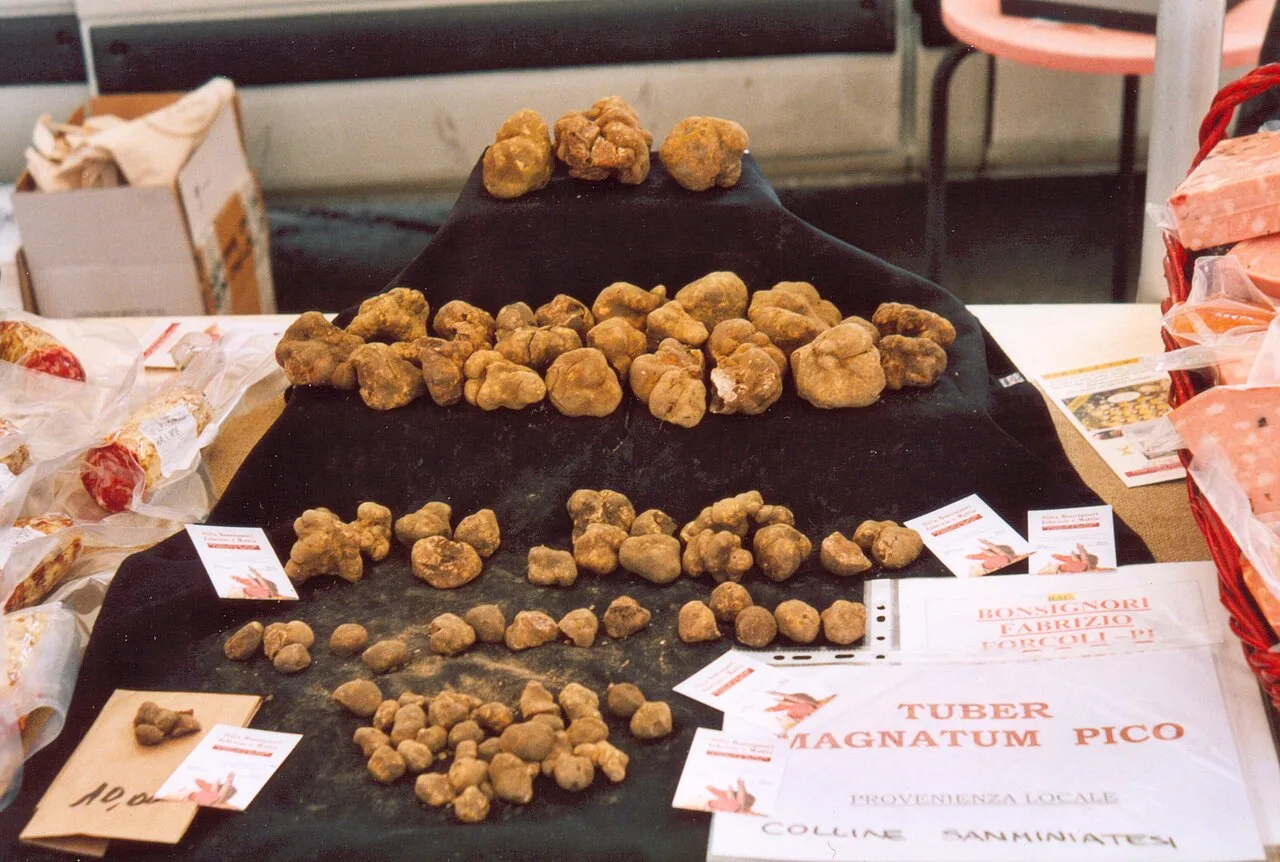
Alba's white truffle depends on cool, damp soil and on the fungus bonding with tree roots. This year heat and drought upset that balance, and hunters in Italy and Croatia say the harvest is smaller.
What the dry summer did to the soil
A truffle is the underground fruiting body of a fungus that lives in partnership with trees. Antonio Degiacomi, president of Italy's National Centre for Truffle Studies, says dry, compacted soil has produced smaller truffles this season.
He says the lack of rain in July and August and the high temperatures left October with poor production and short shelf life. Hunters around Alba, called trifolau, traditionally start on Oct. 1.
Axel Iberti, president of the International White Truffle Fair, describes a slow start with small specimens. More recent rains have improved conditions and helped larger ones appear.
Scarcity meets a full town
Iberti says truffles cost about 20% to 30% more at Alba's market than a year ago, while demand stays strong despite tighter supplies. The fair has run since Oct. 10 and ends on Dec. 6. During it, hotels and other lodging are almost fully booked.
A trend older than this season
Degiacomi says this year stands out from a pattern that has run for five or six years, with hotter summers and more erratic rainfall.
Across the Adriatic, Petar Alebic hunts in oak forests outside Zagreb. By his account every year for the past seven or eight has been worse than the one before, and he estimates this year's crop at about 30% below normal. He now also leads truffle-hunting tours for tourists to supplement his income.
Mycologist Armin Mesic of the Rudjer Boskovic Institute says drought, lack of rain and high temperatures hit both quantity and quality. Quantities are falling, and so is the area where white truffles grow.
Croatia has about a dozen truffle species, according to Mesic. The white one is the most prized and can fetch as much as 4,000 euros ($4,500) per kilogram.
Trees, water and soil microbes
Degiacomi rejects talk of extinction: "I don't think we're facing extinction; we're facing a challenge."
Scientists are trying improved forest management and experimental watering when droughts drag on. Other teams study what soil microbes contribute and search for trees that tolerate hotter, drier summers.
In the Alba area, communities are working with municipalities, hunters and landowners to create new public truffle grounds and plant trees. Advocates say reforestation can cool the soil, keep water in it and limit erosion.
The payoff is slow. Newly planted trees may take more than a decade to become suitable hosts for truffles. Cultivation of the white truffle is no shortcut either: black truffles can be grown, but white ones have largely resisted large-scale production.
Our take
Higher prices here come alongside smaller and shorter-lived truffles, so they say little about how good the season is. Reforestation is a long-term answer, and it is unclear whether irrigation or the other trials can ease the shortfall in the meantime.
Source: Phys.org