Dune Neutrino Detector Construction Starts Monday in Old Gold Mine
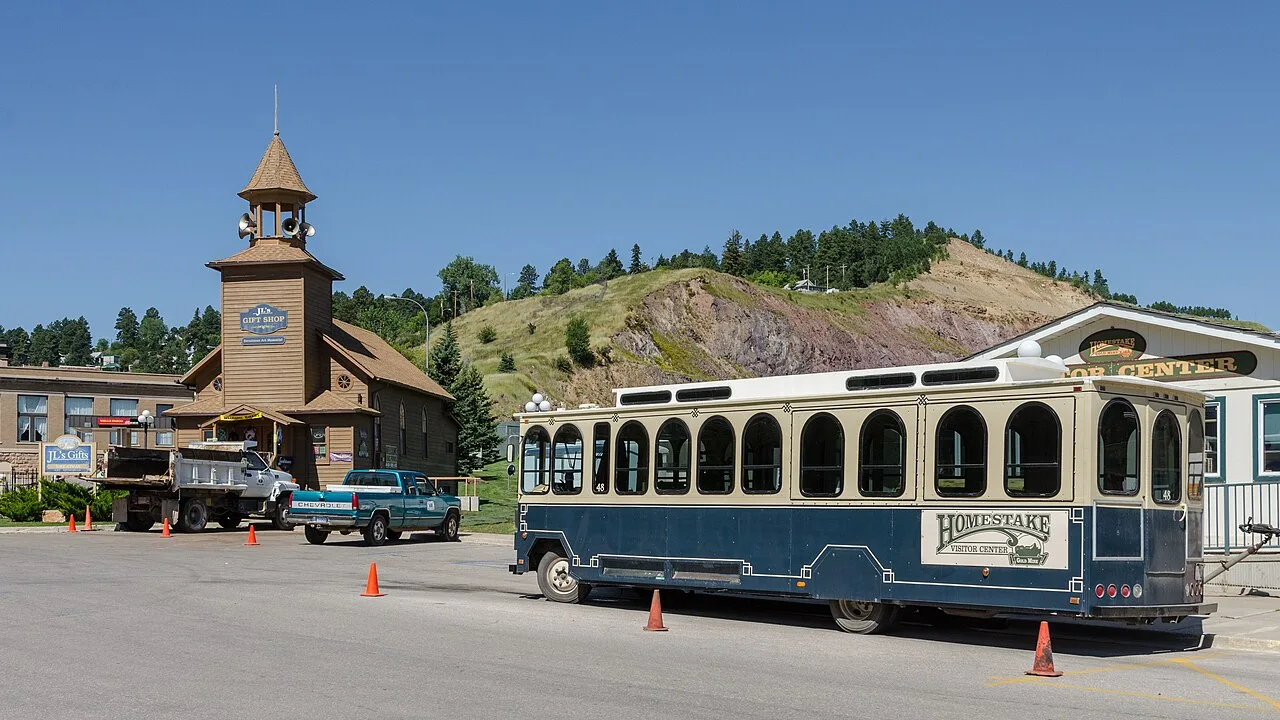
Construction of the Deep Underground Neutrino Experiment, known as Dune, is due to start on Monday in the former Homestake mine in Lead, South Dakota. Engineers will begin assembling four giant detectors inside caverns blasted from rock a mile underground.
The detectors are built to catch neutrinos. Some will come from the sun and distant supernovae. Others will arrive in an intense beam sent through 800 miles (1,300km) of rock from Fermilab, a government laboratory near Chicago.
A town that turned from gold to physics
Lead has a history with these particles. In the 1960s, physicist Ray Davis built a detector in the mine from a 100,000-gallon tank of dry-cleaning fluid. It was the first to record neutrinos from the sun. The mine closed in 2001 and became the Sanford Underground Research Facility. It already hosts the Lux-Zeplin experiment, which reported the first potential detection of dark matter last month.
"We've gone from mining the Earth to helping scientists explore the universe," said Robin Lucero, Lead's city administrator. She said world-class science brings new opportunities for local businesses and young people.
Size of the job
The detectors will use more than 4,000 tonnes of steel. They will stand up to five storeys high and hold a combined 70,000 tonnes of liquid argon chilled to -200C. Assembly should take nearly three years. Filling them with argon will take another year.
"It's like building a ship underground," said Prof David Newbold of the UK's Science and Technology Facilities Council, a Dune spokesperson. The UK is the largest international partner in the US-led project. It is making core detector components and computing to reconstruct events, plus the graphite target that generates neutrinos at Fermilab.
Neutrinos barely interact with matter. About a trillion pass through a human body each second. They come in three varieties with tiny, different masses and change from one to another as they travel. Dr Kate Shaw of the University of Sussex, an experimental particle physicist on Dune, said: "Neutrinos do not make sense yet and they could open a door to new physics."
Dune will look for differences between neutrinos and their antimatter twins, hoping to explain why the world is made of matter and not antimatter. It will also try to establish which neutrino is lightest and which heaviest. The detectors will also study neutrinos from space, which carry information on stellar explosions and the formation of black holes.
Source: the Guardian