Study: Warming Seas May Unbalance Food Webs Around UK
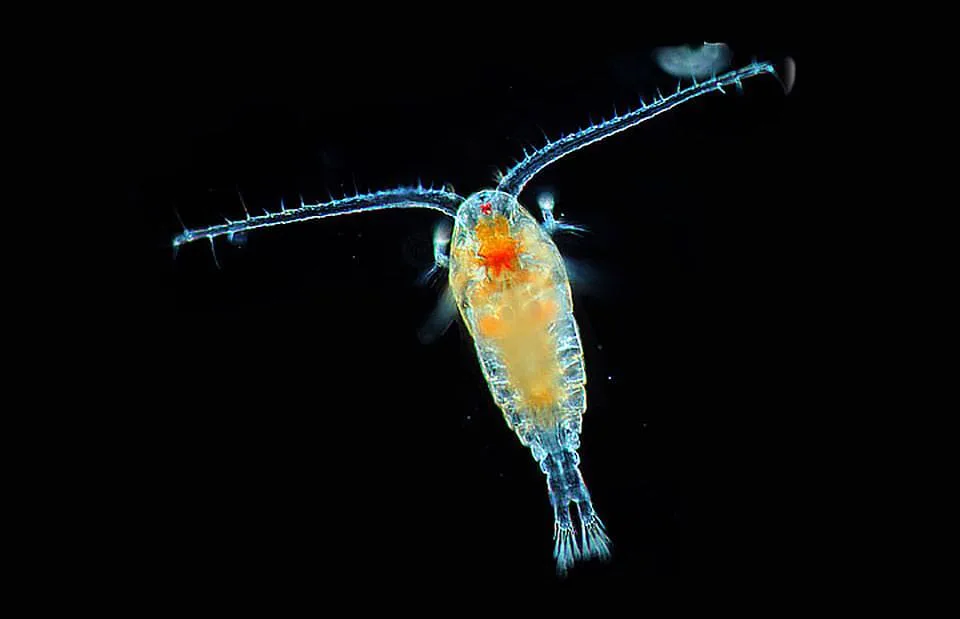
Warming seas around the UK could bring more fish species and fewer species of the plankton they depend on. The scientists behind a four-year study say that mismatch could reshape marine ecosystems in ways nobody has foreseen.
Fish up, plankton down
The projections rest on a scenario of 3C (5.4F) of warming by 2100, meaning a fixed set of assumptions about how far the climate warms. Under it, fish and seabed invertebrates may become more diverse by mid-century, by about 12%. Phytoplankton, the drifting plant-like plankton, could lose about 3% of their diversity by 2050. Zooplankton, the drifting animal plankton, could lose about 7%.
Plankton sit low in the food chain, so the authors say the imbalance could upset marine food webs and leave ocean ecosystems less healthy and less able to recover. They say it could jeopardise food security by 2050.
Why the result surprised the team
Elena Couce, a marine ecologist at Cefas and co-lead author, said the team had expected diversity to rise in middle latitudes such as the UK. As temperatures climb, species from the south arrive, and they are more diverse than the species lost to the north.
"What surprised us is that warming doesn't increase or decrease biodiversity across the board," she said. The study, in other words, challenges the assumption that mid-latitude seas simply gain biodiversity.
Lily Greig, who co-led the study, said: "If predator diversity rises while prey diversity falls, that has the potential to disrupt the food chain." She added that more species in one group do not prove that the whole ecosystem is getting sturdier.
A hotspot with known winners and losers
The seas around the British and Irish Isles, southern North Sea in particular, are marked as "marine climate hotspots". They are among 20 worldwide that have warmed fastest over 50 years.
Earlier Cefas work on key fish species pointed to climate winners in north-western European waters, among them anchovies, seabass and sardines. Atlantic cod, haddock and coley were listed as losers. The new study looks wider, at four groups of marine life in UK waters and the north-east Atlantic including Ireland and France.
The team and its method
Cefas, a British government agency, led the work, published in Science Advances. Partners came from the University of East Anglia, the Marine Biological Association, UiT the Arctic University of Norway, the Royal Netherlands Institute for Sea Research and the Technical University of Denmark. They combined long-term datasets with machine-learning techniques to project change to 2100.
What it means for policy
Couce said policymakers are charged with preserving or even increasing biodiversity. Climate change is already altering it, she said, and that has to be factored in before other management plans are drawn up.
The researchers say the study could serve as an early warning system, because it maps the fastest biodiversity shifts and the most exposed parts of the ecosystem. It has already gone to the government's review of marine protected areas, a process that covers fishery management measures.
Source: the Guardian