Antarctic Rock Ridges Dated, Filling Gap in Glacier History
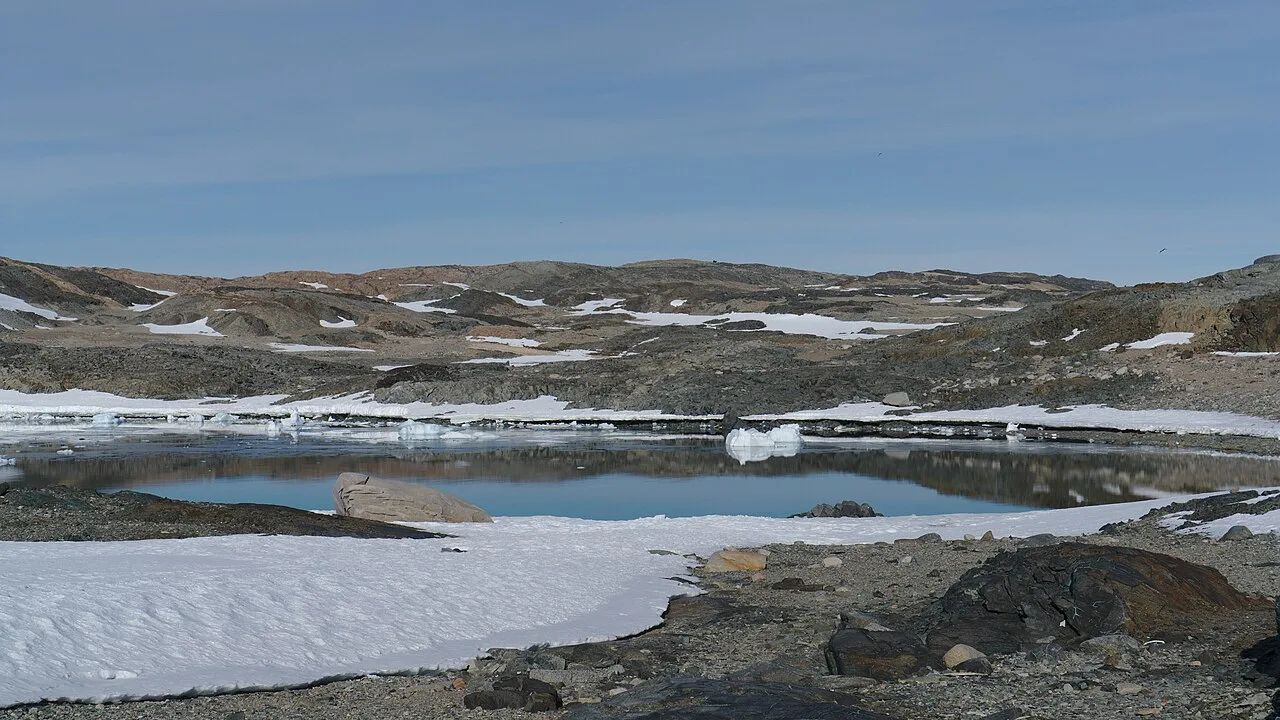
Researchers have dated rock ridges left by glaciers in Marguerite Bay, the largest bay on the western Antarctic Peninsula. The study gives the first direct surface-exposure ages for late-Neoglacial moraines there, including Little Ice Age moraines. It is published in Quaternary Science Reviews.
A moraine is a ridge of rock and sediment deposited or pushed by moving ice. Until now, scientists lacked direct evidence of when many of these ridges formed. The work was led by professor Attila Çiner of the Eurasia Institute of Earth Sciences at Istanbul Technical University.
How the dating works
When a glacier retreats and exposes rocks, they begin to collect trace amounts of beryllium-10, produced by cosmic rays. Measuring the isotope shows how long a rock surface has been exposed.
The team studied moraines linked to three glaciers: Shoesmith and Erinç on Horseshoe Island, and Erol Glacier on the nearby Calmette Peninsula.
The clearest record came from the Shoesmith Moraine. After samples with older geological signals were removed, its age came out at 496 ± 79 years. That places its formation in the Little Ice Age, at the end of the Neoglacial, a cooling phase that began around 4,000 years ago and ended roughly 200 years ago.
An advance near Rothera Point, less than 50 kilometres (31 miles) from the study site, happened around the same time.
Older rocks in younger ridges
The other two glaciers were harder to read. Rocks from the Erinç Moraine showed a broader age range. The researchers favour an age of 1,163 ± 403 years, which suggests an earlier late-Neoglacial advance. A nearby undated ridge, only a few metres from the present glacier, might date from the Little Ice Age, but that link is tentative.
At Erol Glacier, three boulders were far older than the moraine itself, from around 2,000 to nearly 10,000 years. They had kept beryllium-10 from earlier exposure. Parts of the Erol Moraine also sit on top of previously dated raised beaches, so the glacier must have advanced after those beaches formed.
"Antarctic rocks do not always reset their geological clocks to zero when a glacier moves them," Çiner explained. "Some carry an older history with them. That is why we need to interpret the dates together with the surrounding landscape."
Inner moraine ridges tied to Little Ice Age glacier positions are often only about 25 to 50 metres (82 to 164 feet) from today's glacier fronts. The researchers say this may point to some local stability despite strong warming on the peninsula in recent decades. They add that it does not mean the glaciers are immune to future change.
The study does not claim to pinpoint the Little Ice Age in Antarctica. Many other undated moraines and lakes around Marguerite Bay could add to the record, and the team says further work is needed on how warming and changes in snowfall may affect the ice.
"Satellites reveal the current state of Antarctic glaciers, while the landscape records their past activity," Çiner said.
Source: Phys.org