Aloe Traces Found in a 2,700-Year-Old Mummy Skull
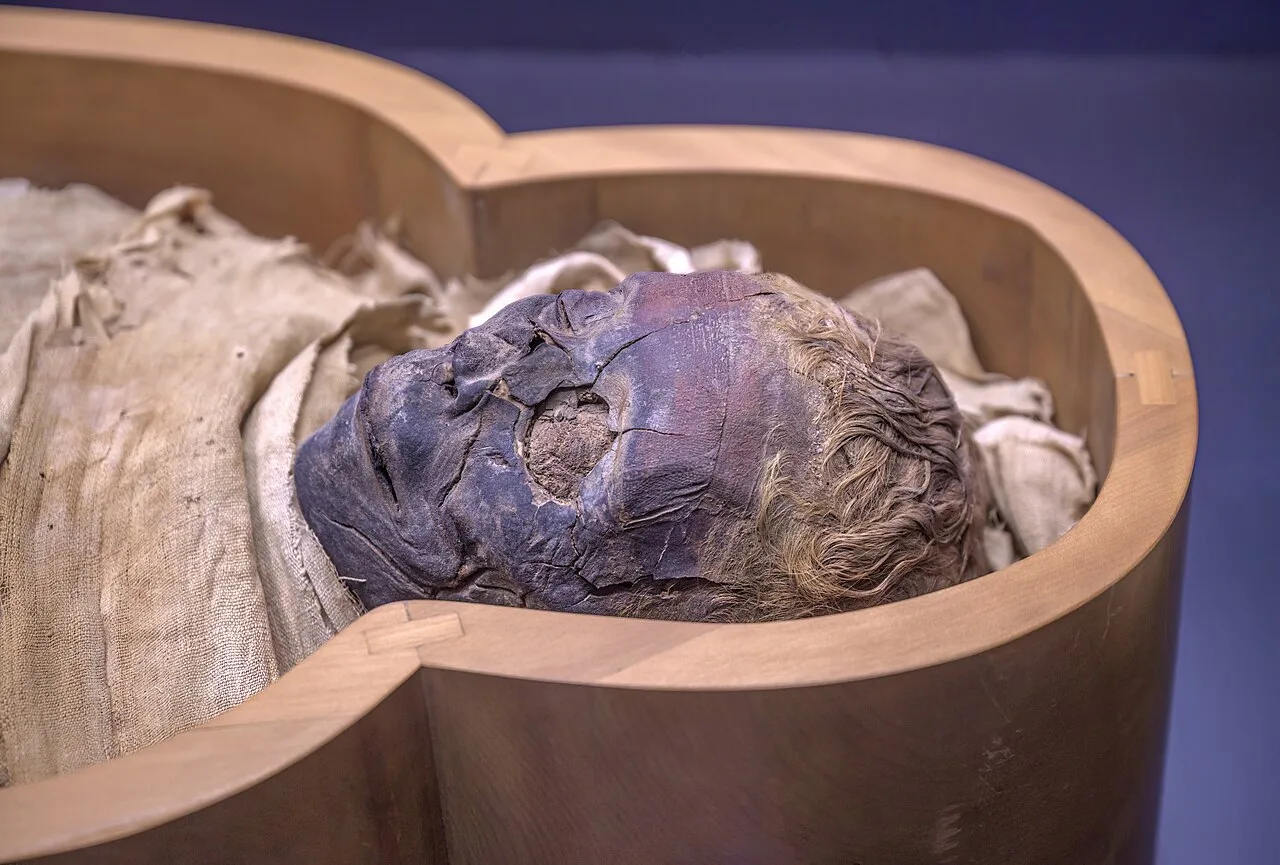
Aloe may have been among the plant materials used to preserve the dead in ancient Egypt, and a skull in a Marburg collection supplies the first molecular hint. The same chemical signal appeared in an 18th-century drug sold as mummy medicine.
Two objects with the same plant signature
Earlier chemical work on embalming mixtures had already found coniferous resins, tars, pistachio resins, plant oils, animal fats, beeswax and bitumen. Which plants exactly were used, and how recipes changed by period, region and body part, stayed open.
The Marburg team analysed 24 objects from university and museum collections. Only two carried compounds associated with aloe.
One was a mummified skull from the university's Zoological Collection, dated by radiocarbon to the eighth century B.C. The other was a preparation of Mumia vera aegyptiaca from the Löwen Pharmacy in Offenbach am Main, now in the Heidelberg Pharmacy Museum.
Mummy as medicine
The second sample is not an embalmed body. Mumia vera aegyptiaca was a medicinal substance used in Europe in the late Middle Ages and the early modern period. It was made from mummy material and the embalming substances on it, or traded as a ready-made product.
So the study links two very different kinds of object: a head that was embalmed in antiquity and a remedy that Europeans later bought and took. The study appeared in the Proceedings of the National Academy of Sciences.
A medieval association gets a possible basis
Medieval texts connected aloe with mummy material used as medicine. Until now, the authors of those texts were thought to be guessing from Scripture, for example John 19:39, because Egyptian embalming know-how had disappeared.
Dr. Tanja Pommerening, who heads the Institute for the History of Pharmacy and Medicine at Marburg, said the findings suggest the association "may have deeper historical roots".
The word itself needs care. Historical texts used "aloe" for several materials, including plants of the genus Aloe and agarwood, a scented wood from Aquilaria trees. The compounds detected point to Aloe, not agarwood.
Why the team does not call aloe standard
Two hits in 24 objects are too few to say aloe was generally used in mummification. The researchers say it may have been reserved for certain embalming traditions, tied to a particular era or to what ingredients were available.
They also went back to Egyptian writing. The term ꜥnḫ-jm.j came into focus, and some descriptions suggest it may mean aloe or an exudate from it. A definitive identification has not been achieved.
Fingerprints of museum objects and a flu experiment
Using untargeted metabolomics, a method that compares the overall chemical makeup of samples, the group examined material from the German Pharmacy Museum in Heidelberg. A mummified head and a powder sample catalogued separately turned out chemically very alike. The team reads this as a hint of shared origin, although the collection records say nothing of the sort.
The preparations varied widely in composition, and several held compounds typical of aged conifer resin. An extract from the Wigand Medicinal Collection in Marburg gave moderate protection against influenza-induced cell damage in cell culture.
Its main isolated compound, 7-oxodehydroabietic acid, did not reproduce the effect, so the active ingredient is unknown. The results do not show that the remedy worked in people.
Our take
Two positive samples can show that aloe was present, but not how often or why. The authors say the next steps are to find which other plant compounds were used and to test whether the aloe signal repeats in more specimens. Those results could show whether the medieval texts reflected real practice.
Source: Phys.org